
The Myth of the Underworld: How Films Depict the Realm of the Dead

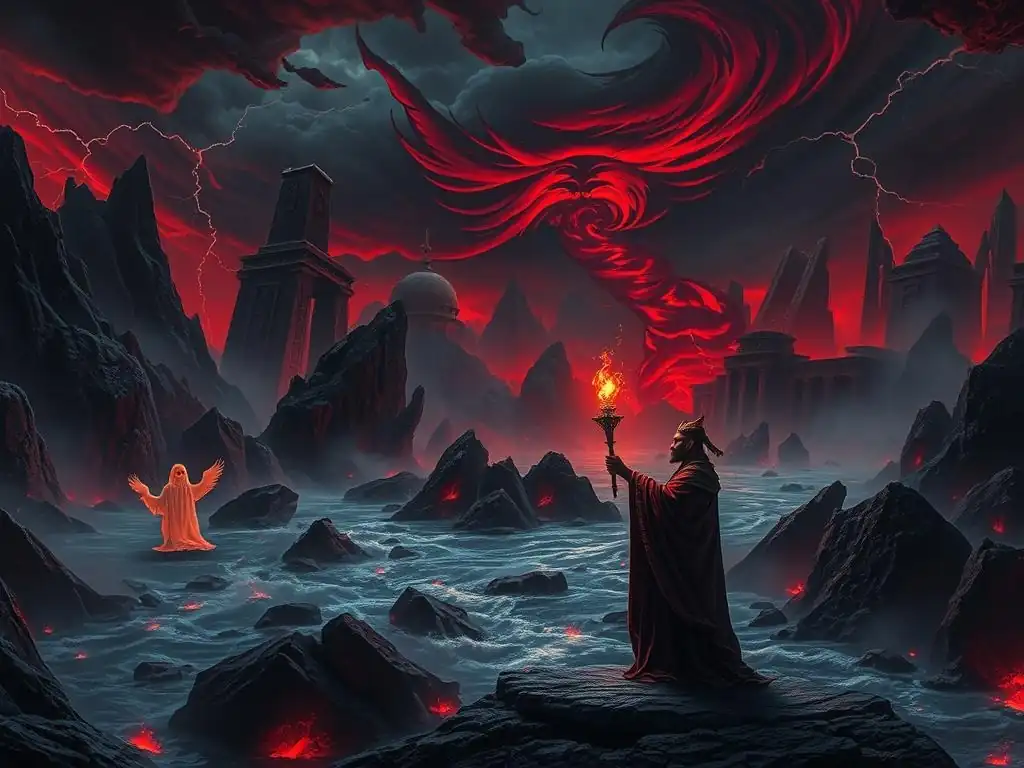
Welcome to Mythology and Legends, where the echoes of ancient stories resonate through time!
Have you ever wondered why the underworld, that shadowy realm beyond life, holds such a persistent grip on our imaginations? In our latest exploration, we delve into the captivating symbolism of underworld depictions, particularly as seen in films. Prepare to journey beyond the veil as we unravel the threads connecting ancient myths to modern cinema. What secrets lie hidden in these cinematic portrayals? Let the descent begin...
- The Myth of the Underworld: Cinematic Depictions and Symbolism in Film
- Common Themes and Symbolism in Underworld Film Adaptations
- Cultural Variations: Different Underworld Depictions Across Cinematic Traditions
- Case Studies: Examining Specific Films and Their Underworld Representations
- The Evolution of Underworld Depictions in Film: From Early Cinema to Modern Blockbusters
- The Impact of Underworld Films on Popular Culture and Mythology
- The Future of Underworld Narratives in Cinema: What's Next for the Realm of the Dead?
-
Frequently Asked Questions
- How accurately do films portray the geographical aspects of the underworld as described in mythology?
- What are some common symbolic representations of death and the underworld frequently used in film?
- How do different cultural mythologies influence the cinematic depiction of the underworld?
- Does the film's genre significantly impact the symbolism used to represent the underworld?
- How does the "hero's journey" archetype relate to the cinematic depiction of the underworld?
- Final Reflection: Descending into the Depths of Meaning
- Unearth Your Own Underworld: Explore the Depths of Myth and Film!
The Myth of the Underworld: Cinematic Depictions and Symbolism in Film
The Enduring Appeal of the Underworld Myth in Film
The concept of an afterlife, particularly a realm of the dead, has captivated human imagination for millennia, giving rise to rich mythologies across diverse cultures. This fascination naturally extends to the silver screen, where the underworld myth provides fertile ground for compelling narratives and striking visual spectacles. Films exploring this theme tap into fundamental human questions about mortality, judgment, and the unknown, making them inherently resonant with audiences worldwide. The persistent return to underworld narratives in cinema underscores its deep cultural significance and its power to explore complex philosophical and emotional landscapes.
From ancient Greek tales of Hades to Egyptian journeys through the Duat and Norse sagps of Helheim, the underworld serves as a potent setting for drama. These cinematic ventures often blend adventure, horror, fantasy, and even romance, offering filmmakers immense creative latitude. The Films underworld depiction symbolism becomes a lens through which we examine not only ancient beliefs but also contemporary anxieties and hopes regarding death and what lies beyond. The enduring appeal lies in the myth's ability to serve as a metaphor for psychological journeys, confronting inner demons, or facing ultimate consequences.
From Ancient Myths to the Silver Screen: Tracing the Underworld's Journey
The journey of the underworld concept from ancient oral traditions and texts to modern cinema is a fascinating evolution of storytelling. Early myths, like Homer's Odyssey or Virgil's Aeneid, provided foundational images and narrative structures: the perilous journey, the ferryman, the judges of the dead, and the distinct regions for various souls. These elements, steeped in rich symbolism, offered filmmakers a pre-existing visual and thematic vocabulary to draw upon. The advent of cinema allowed these abstract concepts to be given tangible, albeit often fantastical, form.
The transition saw these ancient narratives translated into moving images, interpreting age-old symbols for new generations. While some films aim for faithful adaptation, many others use the underworld as inspiration, blending elements from different myths or creating entirely new realms that resonate with archetypal fears and wonders. This process highlights how cinematic underworld symbolism is not static but adapts and evolves, reflecting the cultural context of its creation while still echoing the foundational myths that first described the realm of the dead.
Common Themes and Symbolism in Underworld Film Adaptations
Visual Representations of the Realm of the Dead: Recurring Imagery
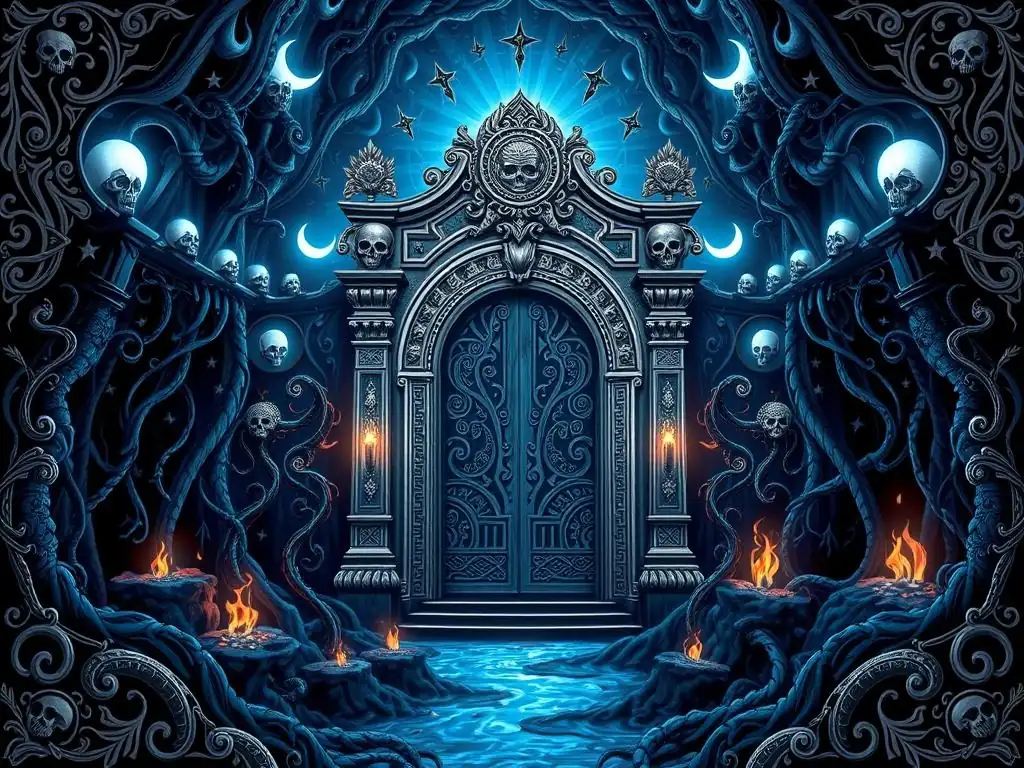
Cinematic depictions of the underworld often rely on a powerful visual language to convey its nature as a place apart from the living world. Recurring imagery frequently includes vast, desolate landscapes – rocky plains, dark caverns, or endless, grey skies – emphasizing isolation and despair.
Subterranean settings are common, reinforcing the idea of a realm "below" the earth, hidden from the sun and life. Light, or the lack thereof, plays a crucial symbolic role; the underworld is typically shrouded in perpetual gloom, lit only by eerie, unnatural sources like flickering torches, phosphorescent fungi, or the faint glow of unseen energy.
Water is another pervasive visual element, often depicted as stagnant lakes, treacherous swamps, or powerful, dark rivers. These bodies of water serve as barriers between realms or paths that souls must traverse. Structures within the underworld are frequently portrayed as imposing, often crumbling or otherworldly, suggesting immense age, power, or decay. Think of the colossal, dark palaces of rulers like Hades or the labyrinthine passages leading deeper into the abyss. These visual choices are deliberate, working together to create an atmosphere that is both terrifying and awe-inspiring, reinforcing the unique and often perilous nature of the cinematic underworld.
The River Styx, Cerberus, and Hades: Key Underworld Elements in Films
Certain iconic elements from Greek mythology frequently appear in films depicting the underworld, serving as powerful shorthand for the realm of the dead. The River Styx is perhaps the most common, often shown as a dark, swirling waterway that souls must cross to reach the afterlife. Charon, the ferryman, is frequently depicted as a silent, skeletal figure guiding the deceased across the river, demanding payment (the coin placed on the eyes of the dead). This imagery directly draws from ancient Greek funeral practices and beliefs, immediately grounding the cinematic underworld in a recognizable mythological framework.
Cerberus, the multi-headed hound guarding the entrance to Hades, is another popular figure used to emphasize the underworld's role as a prison from which escape is difficult or impossible. Its monstrous form and fierce nature symbolize the barriers between life and death. Hades himself, the ruler of the realm, is a central figure whose portrayal varies widely, from a stern but just king to a malevolent deity or even a suave, powerful entity.
His presence embodies the authority and mystery of death. These key figures and locations are not just set dressing; their inclusion is a deliberate choice to invoke the deep-seated mythology associated with the underworld, enriching the Films underworld depiction symbolism with layers of historical and cultural meaning.
Symbolic Meanings: Death, Rebirth, and the Hero's Journey in Underworld Films
Beyond literal interpretations, cinematic underworlds are rich with symbolic meaning, often representing profound psychological or spiritual states. The journey into the underworld frequently symbolizes death itself – not just the end of physical life, but also the death of old selves, past mistakes, or outdated beliefs. The descent into the darkness can represent a confrontation with one's own mortality or the darker aspects of the human psyche. This symbolic death is often a necessary precursor to transformation.
Conversely, the emergence or return from the underworld symbolizes rebirth. The hero, or the soul, who successfully navigates the challenges of the realm of the dead is fundamentally changed by the experience. This mirrors the structure of the hero's journey archetype, where the protagonist undergoes a descent into the unknown, confronts trials, and returns with new knowledge or power. Films underworld depiction symbolism thus intertwines themes of mortality, transformation, and the cyclical nature of life and death, using the mythic setting to explore universal human experiences and the potential for renewal after facing profound loss or challenge.
Cultural Variations: Different Underworld Depictions Across Cinematic Traditions
Greek Underworld in Film: Classic Myths and Modern Interpretations
The Greek underworld, ruled by Hades, is arguably the most frequently depicted realm of the dead in Western cinema, drawing directly from classical literature. Films like Clash of the Titans (both the 1981 original and the 2010 remake) offer glimpses into this realm, often focusing on the journey to rescue a soul or confront a deity. These depictions typically feature the River Styx, Charon, and Cerberus, adhering closely to the established iconography. The realm is often portrayed as bleak and desolate, a place of shadow and sorrow, though the specifics can vary depending on the film's genre and budget.
Modern interpretations sometimes take liberties, blending elements or re-imagining the gods and their domain. The Percy Jackson film series, for instance, presents a contemporary version of the Greek underworld located beneath Hollywood, California, illustrating how ancient myths can be adapted to modern settings while retaining core symbolic elements like the ferryman and the distinct regions of the afterlife (Elysium, Fields of Asphodel, Tartarus). These films highlight how the enduring framework of the Greek underworld continues to inspire diverse cinematic explorations, from epic fantasy to urban fantasy, each adding its layer to the evolving Films underworld depiction symbolism.
Egyptian Afterlife in Cinema: Gods, Mummies, and the Journey to the Duat
The Egyptian concept of the afterlife, known as the Duat, offers a distinctly different vision from the Greek underworld, and it has also found its way into cinema, particularly in films centered around mummies and ancient curses. Egyptian beliefs involve a complex journey for the soul (Ba and Ka) through various trials and encounters with gods before reaching the judgment of Osiris in the Hall of Truth.
Films like The Mummy franchise, while primarily adventure stories, incorporate elements of this mythology, depicting tomb passages that mirror the journey through the Duat or showing interactions with deities like Anubis, the jackal-headed god of embalming and the afterlife.
Cinematic portrayals often emphasize the elaborate rituals, the importance of the Book of the Dead, and the potential dangers faced by the soul (or the living who trespass) in the afterlife realm. The visual style is distinct, featuring hieroglyph-covered walls, grand temples, and representations of Egyptian gods in their animal or human forms.
While sometimes sensationalized for entertainment, these films introduce audiences to concepts like the weighing of the heart against the feather of Ma'at, providing a glimpse into the unique structure and symbolism of the Egyptian afterlife, contributing to the broader understanding of Films underworld depiction symbolism across cultures.
Other Cultural Underworlds: Norse Hel, Aztec Mictlan, and More on Film
Beyond the dominant Greek and Egyptian portrayals, films occasionally delve into the underworld myths of other cultures, offering diverse perspectives on the realm of the dead. Norse mythology features Helheim, ruled by the goddess Hel, often depicted as a cold, dark, and dreary place for those who did not die gloriously in battle. Films incorporating Norse elements, such as certain superhero movies or fantasy epics, may touch upon this realm, contrasting it with the warrior's paradise of Valhalla. These depictions often highlight themes of fate, duty, and the different destinies awaiting souls based on their life's actions.
Similarly, myths from Mesoamerican cultures, such as the Aztec Mictlan, the lowest layer of the underworld requiring a perilous four-year journey, have appeared in more specialized or animated films. These narratives emphasize challenging landscapes, trials by elements, and encounters with specific deities governing the dead. While less common in mainstream cinema compared to Greek or Egyptian myths, these cultural variations enrich the tapestry of Films underworld depiction symbolism, showcasing the universal human preoccupation with death and the afterlife through unique cultural lenses and narrative structures.
Case Studies: Examining Specific Films and Their Underworld Representations
Orpheus (1950): An In-Depth Look at Its Underworld Portrayal
Jean Cocteau's Orpheus (1950) is a seminal work that re-imagines the classic Greek myth of Orpheus and Eurydice within a surreal, post-war French setting. Its portrayal of the underworld is notably abstract and bureaucratic, deviating significantly from traditional visual tropes. Instead of fiery pits or shadowy landscapes, Cocteau's underworld is accessed through mirrors and populated by figures who resemble government officials or agents of death. This unique interpretation uses the myth to explore themes of art, mortality, and the boundaries between life and death in a modern context.
The film's underworld functions less as a geographical location and more as a liminal space, a bureaucratic machine that processes souls. Death herself is personified not as a grim reaper but as a glamorous princess with her own entourage of motorcyclists. This allegorical approach allows the film to delve into the psychological and existential dimensions of the myth, using the underworld as a metaphor for the unknown, the subconscious, or the inevitable forces that govern life. The film's enduring influence lies in its innovative Films underworld depiction symbolism, proving that the myth can be reinterpreted in profoundly original ways.
Analyzing Orpheus (1950)'s Visual Style and Symbolic Elements
Orpheus (1950) employs a distinct visual style characterized by its use of mirrors as portals, stark black and white cinematography, and surreal imagery. The mirrors symbolize transitions, reflections of reality, and entry points into other dimensions. The underworld itself is often depicted through unsettling, mundane settings – ruined buildings, desolate highways, or sterile, official-looking rooms – which adds to its uncanny atmosphere. The figures associated with Death, particularly her silent, leather-clad motorcyclist retinue, evoke a sense of inexorable, modern fate, a departure from ancient mythological figures.
Symbolic elements abound: the radio transmitting cryptic messages (perhaps voices from the beyond or artistic inspiration), the gloves worn by Death's attendants (symbolizing their detachment or function), and the shattered mirrors (representing broken boundaries or the impossibility of return). The film's symbolism is deliberately ambiguous, inviting multiple interpretations. This abstract approach to Films underworld depiction symbolism focuses less on a literal afterlife and more on the psychological and artistic struggle with mortality, making the underworld a state of being or a process rather than just a place.
The Hero's Descent and Ascent in Orpheus (1950)
In Orpheus (1950), Orpheus's descent into the underworld is not a single, grand journey but a series of entries and exits through mirrors, blurring the lines between worlds. His initial descent is driven by his obsession with Death (the Princess) rather than purely to retrieve Eurydice, adding a layer of artistic and romantic fixation to the classic quest.
His navigation of this bureaucratic, confusing underworld involves following Death's agents and attempting to understand the rules of this strange realm. The descent is portrayed as a challenging, disorienting experience, reflecting the difficulty of confronting the unknown or the forces of fate.
The ascent, or rather the attempt to bring Eurydice back, follows the core mythological constraint: Orpheus must not look back. The film portrays this with intense psychological tension, culminating in the tragic, inevitable glance. However, the film introduces a twist, allowing Orpheus a form of return, albeit one mediated by external forces. This reinterpretation of the descent and ascent highlights the film's focus on the protagonist's internal struggles and external fate, using the underworld narrative structure to explore themes of artistic inspiration, love, and the inescapable nature of death, thus adding a unique perspective to Films underworld depiction symbolism.
Pan's Labyrinth (2006): A Comparative Analysis of Its Underworld Narrative
Guillermo del Toro's Pan's Labyrinth (2006) presents a richly symbolic narrative that intertwines the harsh reality of the Spanish Civil War with a fantastical underworld. While not a direct adaptation of a specific cultural underworld myth, the film draws heavily on folklore and archetypal imagery to create its own distinct realm of the dead, or perhaps, a realm of fantasy deeply connected to life and death.
The film centers on Ophelia, a young girl who is told she is a princess from an underground kingdom who must complete three tasks to return to her true father. This underground kingdom functions thematically as an underworld, a hidden realm with its own rules, trials, and consequences, paralleling the dangerous reality Ophelia faces.
Unlike literal depictions of Hades or the Duat, the underworld in Pan's Labyrinth is accessed through a labyrinth and features creatures from European folklore, such as fauns, fairies, and the terrifying Pale Man. The film's power lies in the ambiguity of this realm – is it real, or is it a coping mechanism for Ophelia?
Regardless, it serves the symbolic function of an underworld: a place of trial, confronting darkness, and ultimately, a transition. The film's approach to Films underworld depiction symbolism is deeply personal and psychological, using the fantasy realm to explore innocence, evil, and sacrifice within a historical context.
Contrasting Pan's Labyrinth (2006)'s Interpretation with Traditional Myths
Pan's Labyrinth differs significantly from traditional underworld myths by presenting a realm that is not necessarily a final resting place for souls but a potential return to a primordial, perhaps pre-life, state. Traditional underworlds are often places of judgment or punishment, whereas Ophelia's journey is framed as a test to prove her worthiness to return to her royal heritage. The film's "underworld" is also deeply intertwined with the living world, accessed through physical locations and influencing Ophelia's actions in reality.
While it lacks specific figures like Charon or Hades, Pan's Labyrinth utilizes archetypal symbols found in many underworld myths: a guide figure (the Faun), perilous tasks, monstrous guardians (the Pale Man), and a final choice involving sacrifice. The symbolism is less about the collective fate of the dead and more about an individual's spiritual and moral journey. This comparative analysis highlights how Films underworld depiction symbolism can diverge from source material to create powerful, original narratives that resonate with the core themes of myth while offering fresh interpretations relevant to contemporary concerns.
The Role of Mythical Creatures in Pan's Labyrinth (2006)'s Underworld
The mythical creatures in Pan's Labyrinth are central to its unique portrayal of the underworld realm and its symbolism. The Faun serves as Ophelia's guide, a figure associated with nature, ancient wisdom, and ambiguity – is he benevolent or manipulative? His appearance changes, reflecting perhaps Ophelia's perception or the nature of the tasks. Fairies, typically seen as benevolent guides, appear initially but are revealed to be unreliable, forcing Ophelia to rely on her own judgment.
The most iconic creature is the Pale Man, a terrifying entity with eyes in its hands, guarding a feast. This creature embodies gluttony, evil, and the dangers of temptation. It also symbolizes the monstrousness of the Fascist captain, Vidal, with whom the Pale Man shares visual and thematic parallels (sitting at a table, consuming).
These creatures are not merely inhabitants of the fantasy realm; they are symbolic manifestations of the challenges and moral choices Ophelia faces, both in the underworld and in her harsh reality. Their presence underscores how Films underworld depiction symbolism can be conveyed through creature design and interaction, making the abstract dangers of the afterlife tangible and terrifying.
The Evolution of Underworld Depictions in Film: From Early Cinema to Modern Blockbusters

Technological Advancements and the Visual Spectacle of the Underworld
The cinematic portrayal of the underworld has been profoundly shaped by advancements in film technology. In early cinema, depicting fantastical realms was limited by practical effects and stagecraft, resulting in more abstract or suggestive visuals, as seen in films like Cocteau's Orpheus. The focus was often on atmosphere and symbolic representation rather than literal spectacle. As technology progressed, particularly with the advent of sophisticated special effects and later, CGI, filmmakers gained the ability to create increasingly complex, detailed, and immersive underworld environments.
Modern blockbusters can render vast, desolate landscapes, hordes of CGI creatures, and elaborate architectural structures that were previously impossible. Films like the Lord of the Rings trilogy (specifically the Paths of the Dead sequence) or films directly featuring hellish realms (like Constantine or Spawn) leverage these technologies to create visually stunning, often overwhelming, depictions of the afterlife. This evolution highlights how technological capability directly impacts Films underworld depiction symbolism, allowing for more literal and grand-scale interpretations of mythic realms, transforming them into epic visual spectacles.
Shifting Interpretations: How Societal Views on Death Influence Film
Cinematic underworld depictions also reflect shifting societal views on death, religion, and the afterlife. In periods where religious belief was more dominant, film portrayals might have leaned towards more traditional, religiously-influenced concepts of heaven, hell, or purgatory. As societies have become more secular or diverse in their beliefs, film interpretations have broadened, incorporating psychological, existential, or purely fantastical elements. The underworld can become a metaphor for mental states, trauma, or the consequences of environmental destruction, reflecting contemporary concerns.
Furthermore, changing attitudes towards authority and fate can influence how figures like Hades or other rulers of the dead are portrayed – moving from stern arbiters to complex, sometimes sympathetic, characters or even villains. The rise of horror as a genre has also led to underworlds depicted purely as realms of terror and torment. This dynamic relationship between societal perspectives and cinematic choices demonstrates how Films underworld depiction symbolism is a living, evolving form of cultural expression, adapting ancient myths to resonate with the anxieties and philosophies of the time.
The Impact of Underworld Films on Popular Culture and Mythology
Shaping Contemporary Understanding of Ancient Myths
Films centered on the underworld have played a significant role in shaping popular culture's understanding of ancient myths, particularly those from Greece. While often taking creative liberties, these movies introduce millions to characters like Hades, Persephone, Charon, and Cerberus, and concepts like the River Styx or Tartarus. For many, cinematic portrayals are their first or primary exposure to these mythological elements. Films act as powerful visual storytellers, cementing certain images and narratives in the public consciousness, even if they deviate from original texts.
This cinematic influence means that popular conceptions of the underworld are often a blend of ancient sources and modern film interpretations. For example, the visual style of a film's Hades or the appearance of its underworld landscape can become the default image for audiences. This isn't always accurate to the source material, but it demonstrates the considerable power of film to translate complex mythologies into accessible, memorable forms. The impact is undeniable in how Films underworld depiction symbolism becomes part of the broader cultural lexicon.
Underworld Films as a Reflection of Human Fears and Aspirations
Ultimately, films depicting the underworld serve as a powerful reflection of fundamental human fears and aspirations. The fear of the unknown, the anxiety surrounding death and judgment, and the dread of eternal separation or punishment are palpable in many cinematic underworlds. These films tap into the primal human need to understand what happens after life ends and to confront the inevitability of mortality. The terrifying aspects of the underworld mirror our deepest anxieties about loss, regret, and the potential consequences of our actions.
Conversely, elements within underworld narratives also reflect human aspirations: the hope for a peaceful afterlife (Elysium), the desire for reunion with loved ones, the belief in justice (judgment of the dead), and the enduring human spirit's capacity for courage in the face of ultimate adversity (the hero's journey into and out of the underworld). Films underworld depiction symbolism thus becomes a mirror reflecting our collective grappling with life's most profound mysteries, using ancient myths to explore timeless questions about existence, meaning, and destiny.
The Future of Underworld Narratives in Cinema: What's Next for the Realm of the Dead?
Emerging Trends and Innovative Approaches to Underworld Storytelling
The future of underworld narratives in cinema is likely to see continued innovation, building on the foundations of traditional myths while exploring new themes and visual styles. One emerging trend is the blending of genres, perhaps incorporating horror with psychological drama, or fantasy with social commentary, using the underworld setting to explore contemporary issues. We may see more films drawing from less-represented cultural mythologies, offering fresh perspectives beyond the dominant Greek and Egyptian narratives.
Another approach involves using the underworld as a more abstract or metaphorical space, representing digital realms, collective consciousness, or environmental collapse, pushing the boundaries of Films underworld depiction symbolism. Animated features and independent films are also platforms for highly creative and non-traditional underworld concepts. As technology advances, expect even more visually stunning and immersive interpretations, potentially blurring the lines between film and interactive experiences, allowing audiences to "journey" into these realms in new ways.
The Enduring Power of the Underworld Myth in Film
Despite evolving technologies and shifting cultural landscapes, the underworld myth retains an enduring power in film. Its core themes – death, judgment, the journey, and the boundary between worlds – are universal and timeless. As long as humans contemplate mortality and the mysteries of the afterlife, the underworld will remain a compelling subject for cinematic exploration. Each new film offers an opportunity to reinterpret ancient symbols and narratives, reflecting the current generation's fears, hopes, and understanding of the great unknown.
The continued fascination ensures that Films underworld depiction symbolism will remain a rich area for analysis and creativity. Filmmakers will continue to draw inspiration from the vast repository of global myths while simultaneously inventing new visual languages and narrative structures to explore the realm of the dead. The underworld in cinema is not merely a setting; it is a powerful symbolic tool that allows us to confront our deepest fears and ponder the most fundamental questions of existence, ensuring its presence on the silver screen for years to come.
Frequently Asked Questions
How accurately do films portray the geographical aspects of the underworld as described in mythology?
Films often take creative liberties with the underworld's geography. While some adhere to traditional rivers and landscapes, others present unique and stylized interpretations.
What are some common symbolic representations of death and the underworld frequently used in film?
Common symbols include darkness, shadows, and gates, representing the transition between life and death. Characters like Charon are also frequent symbolic depictions.
How do different cultural mythologies influence the cinematic depiction of the underworld?
Films draw inspiration from various mythologies, leading to diverse portrayals. Greek, Egyptian, and Norse underworlds all offer distinct visual and thematic elements.
Does the film's genre significantly impact the symbolism used to represent the underworld?
Yes, genre plays a crucial role. Horror films might emphasize fear and suffering, while fantasy films might focus on adventure and magic within the underworld.
How does the "hero's journey" archetype relate to the cinematic depiction of the underworld?
The underworld often serves as a challenging stage in the "hero's journey," where protagonists confront their inner demons or face ultimate trials to achieve redemption.
Final Reflection: Descending into the Depths of Meaning
The cinematic underworld, far from being a mere backdrop for thrilling adventures, serves as a potent reflection of our deepest anxieties and aspirations. Our fascination with its portrayal persists, mirroring our ongoing struggle to understand mortality, justice, and the very nature of existence itself. From the shadowy realms of Greek mythology to the stylized hellscapes of modern cinema, the symbolic language of the underworld continues to resonate powerfully in our collective consciousness.
The enduring power of underworld imagery lies in its ability to tap into our primal fears and hopes. It's a space where societal norms crumble, where the rules of the living world no longer apply. This liminal space allows filmmakers to explore complex themes of redemption, punishment, and the cyclical nature of life and death. The underworld is not merely a place, but a state of being, a reflection of the inner landscape of the soul.
This quote, though not from a specific film, encapsulates the profound psychological depth that the cinematic underworld consistently offers. The way filmmakers choose to visually represent this space – through lighting, architecture, and the very inhabitants themselves – speaks volumes about their own perspectives and the cultural anxieties of their time.
Consider the films discussed in this article, and how their depictions of the underworld have shaped your own understanding of this powerful symbol. What resonates most with you? What anxieties or hopes does the cinematic underworld reflect in your own life? I urge you to actively engage with these questions, not just as a passive viewer, but as an active participant in the ongoing conversation surrounding death, morality, and the enduring power of cinematic storytelling. Let the symbolic landscapes of the underworld inspire you to delve deeper into your own inner world and confront the mysteries that lie within.
Unearth Your Own Underworld: Explore the Depths of Myth and Film!
Thanks for delving into the fascinating world of cinematic depictions of the Underworld! You've now gained a deeper understanding of how different cultures and filmmakers interpret this ancient myth. Ready to take your exploration further?
- Craft your own Underworld: Imagine and describe your version of the afterlife. What creatures inhabit it? What are its rules? Let your creativity run wild! This is your chance to truly engage with the mythology.
- Share your vision: Post your Underworld creation in the comments below! Let's build a collaborative world of myth and imagination together.
- Explore further: Dive deeper into the mythology of specific cultures mentioned in the article – research their unique beliefs and interpretations of the afterlife.
What unique element would you add to the cinematic portrayal of the Underworld to make it truly unforgettable?