
The Role of Animals: Mythical Creatures and Companions in Epics.

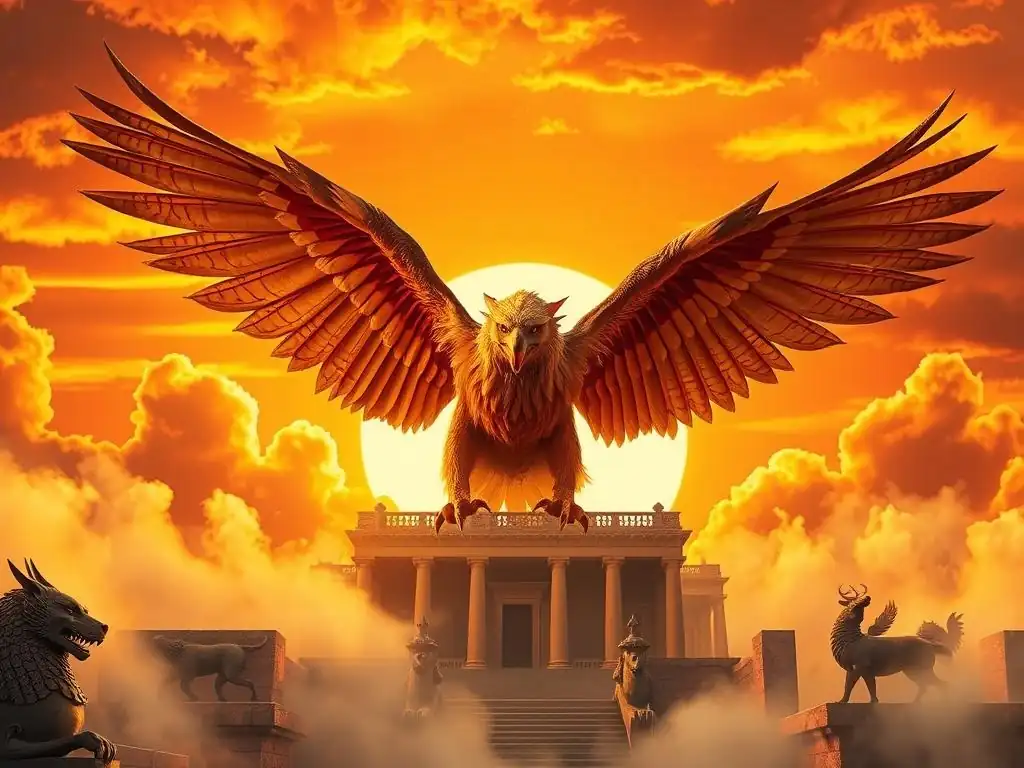
Welcome to Mythology and Legends, where we delve into the captivating tapestry of global folklore. Ever wondered about the profound connection between humans and animals in ancient stories? Prepare to embark on a journey through the ages as we explore the powerful roles of beasts, both real and imagined, in shaping epic narratives. Today, we unravel the secrets behind Animal myths epic stories, uncovering their symbolism and enduring influence across cultures. Curious to discover how these creatures became integral to our understanding of heroism, morality, and the very fabric of our world? Read on...
Introduction: Exploring Animal Myths in Epic Literature
Animals, both real and fantastical, hold a profound and often central place within the world's great epic narratives. Far more than mere background elements, they function as potent symbols and active agents, significantly shaping plots, influencing hero's journeys, and embodying complex cultural values.
Their presence underscores the deep connection ancient and classical societies felt with the natural world, viewing animals not just as creatures, but as beings imbued with spirit, power, and sometimes, divine connection. Exploring these animal myths in epic stories offers a window into the foundational beliefs and worldviews of diverse civilizations, from the ancient Near East to classical Greece and the sagas of the North.
The exploration of animal myths in epic stories provides a fascinating cross-cultural perspective on shared human experiences and differing interpretations of nature. Across continents and centuries, epics like the Epic of Gilgamesh, Homer's Odyssey and Iliad, the Indian Mahabharata and Ramayana, and the Norse Poetic Edda feature a rich tapestry of animal roles.
These roles range from loyal companions who aid the hero in their quest to monstrous adversaries who represent the ultimate test of their strength and virtue. Analyzing these varied portrayals reveals universal archetypes alongside unique cultural nuances, highlighting how different societies perceived the roles animals played in the cosmic order and human destiny.
- What is the significance of animals in epic stories within the context of mythology and legends?
- How do animal myths and legends reflect the values of different cultures?
- Can you provide an example of a mythical creature frequently found in epic stories and explain its symbolic meaning?
- How do animals function as companions or helpers to heroes in epic stories?
- What impact do animal myths and legends have on contemporary society and culture?
Animal Archetypes in Epic Narratives
The Hero's Animal Companion: Loyalty and Courage
One of the most enduring archetypes in animal myths epic stories is the hero's animal companion, embodying unwavering loyalty and courage. These creatures are not just pets; they are often extensions of the hero's own spirit or virtues, providing support, guidance, and sometimes even rescue. A prime example is Argos, the faithful dog of Odysseus in Homer's Odyssey.
Having waited twenty years for his master's return to Ithaca, the old hound recognizes Odysseus despite his disguise. In a poignant scene, Argos wags his tail, drops his ears, and then dies, having fulfilled his duty of waiting. This moment emphasizes the depth of loyalty possible, highlighting the emotional bond between man and animal and serving as a stark contrast to the disloyalty Odysseus finds among some human inhabitants of his palace.
Another celebrated instance, though bordering on historical accounts intertwined with legend, is Bucephalus, the magnificent horse of Alexander the Great. Accounts from ancient historians like Arrian describe how young Alexander was the only one capable of taming the seemingly wild stallion. Bucephalus became Alexander's constant companion in battle, carrying him through countless campaigns across Asia Minor, Egypt, and into India.
The horse's reported death after the Battle of the Hydaspes (approximately 326 BC) and Alexander's subsequent founding of a city named Bucephala in its honor underscore the profound significance and bond attributed to this animal companion, symbolizing not just transport but partnership in conquest and destiny. These companions often mirror the hero's own qualities – Argos's endurance reflecting Odysseus's perseverance, and Bucephalus's untamable spirit aligning with Alexander's ambition.
Mythical Beasts as Antagonists: Challenges and Trials
Epic narratives are replete with formidable mythical beasts that serve as primary antagonists, representing the chaos, the unknown, and the ultimate tests of a hero's worthiness. These creatures are often embodiments of primal forces or cosmic disorder that the hero must confront and overcome to restore balance or achieve their goal. Dragons are perhaps the most iconic, appearing in diverse mythologies.
In the Anglo-Saxon epic Beowulf, the aging hero faces a barrow-dwelling dragon whose hoard was disturbed. This dragon's fiery wrath devastates the land, and Beowulf's final, fatal battle against it represents his last great service to his people, a struggle against overwhelming destructive power.
Beyond dragons, other monstrous creatures challenge heroes in significant ways. The Lernaean Hydra, a multi-headed serpent slain by Heracles as one of his Twelve Labours, symbolizes a challenge that grows stronger with attempts to destroy it, representing insurmountable obstacles or regenerating evil. The Chimera, a composite beast of lion, goat, and serpent also battled by heroes like Bellerophon, embodies unnatural combinations and chaotic power.
These creatures are not just physical threats; they are often symbolic manifestations of the hero's internal struggles or the societal fears of the time. Defeating them signifies the hero's mastery over chaos, their courage in facing the darkest aspects of existence, and their ability to impose order on the world, reinforcing the themes inherent in many animal myths epic stories.
Cross-Cultural Comparison of Animal Representations
Animal Deities and Divine Messengers in Epic Traditions
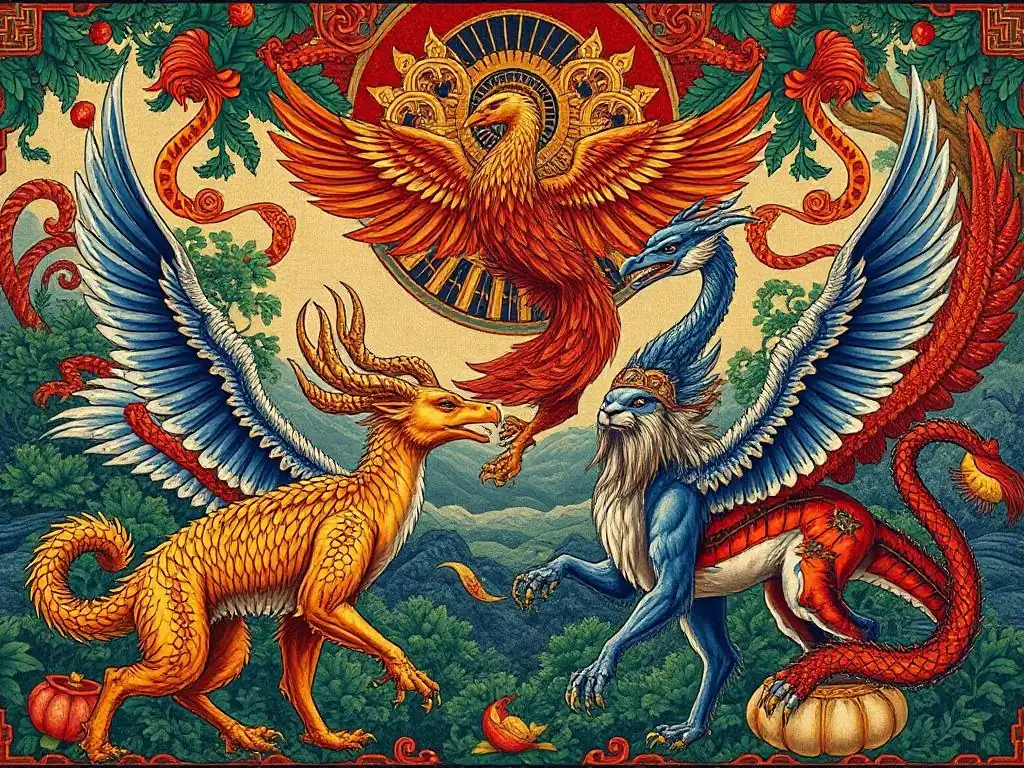
Across various epic traditions, animals frequently appear as deities or divine messengers, bridging the gap between the mortal and divine realms. Their presence often signals divine intervention, provides crucial guidance, or embodies the power and attributes of the gods themselves. In the Indian epic Ramayana, Garuda, the king of birds, serves as the divine vehicle of the god Vishnu.
Often depicted as a mighty eagle or a being with human and bird features, Garuda is a powerful figure associated with speed, strength, and the sun. His role in the Ramayana includes freeing Rama's brother Lakshmana from the magical serpent-noose of Indrajit, demonstrating his divine power and connection to the cosmic order, acting directly on behalf of divine will to aid the epic's heroes.
Norse mythology, as recounted in the Poetic Edda and Prose Edda, features Odin's ravens, Huginn (Thought) and Muninn (Memory). These two birds fly throughout the nine worlds, gathering information and reporting back to the Allfather. They perch on his shoulders and whisper the news of the world into his ears, making him the most knowledgeable of the gods.
Huginn and Muninn are more than just messengers; they are extensions of Odin's own consciousness, symbolizing his constant quest for knowledge and his omnipresence. Their role highlights how animals can embody abstract concepts and serve as vital conduits of information and wisdom from the divine sphere, adding layers of meaning to animal myths epic stories.
Shapeshifting and Animal Transformation in Epic Tales
The motif of shapeshifting, where beings can transform into animals, is a powerful theme in many epic tales, representing fluidity, adaptation, and a deep, sometimes mystical, connection to nature. This transformation can be voluntary, involuntary, or a consequence of magic or divine intervention. It often signifies a crossing of boundaries between human and animal, culture and nature, or different states of being.
In Celtic folklore, which shares thematic elements with larger epic cycles, the Selkies are beings who are seals in the sea but can shed their skins to become human on land. Tales involving Selkies often explore themes of identity, belonging, and the pull between two worlds, highlighting the liminal space between human society and the wild, untamed ocean represented by their animal form.
Japanese folklore and epic narratives, such as those found in the Kojiki and Nihon Shoki, also feature numerous instances of animal transformation, particularly involving creatures like kitsune (foxes) and tanuki (raccoon dogs). These beings are often depicted as tricksters with magical abilities, including the power to change shape into humans or other forms.
While not always central to grand heroic epics in the same way as Western dragons, their presence in foundational myths and legends underscores the cultural belief in the interconnectedness of the spirit world, the animal kingdom, and human life. These transformations often serve to illustrate moral lessons, explain natural phenomena, or simply add an element of wonder and unpredictability to the narrative landscape of animal myths epic stories.
Specific Animal Symbolism in Select Epic Poems
The Eagle: Power and Prophecy
The eagle holds a consistent and powerful symbolic meaning across numerous epic traditions, frequently associated with power, prophecy, and the divine. Its ability to soar to great heights connects it visually and metaphorically with the sky, the sun, and the supreme deities who reside above.
In the Iliad, eagles often appear as omens, their flight patterns or actions interpreted by seers and heroes as signs from Zeus or other gods. For instance, before a battle, the appearance of an eagle carrying a serpent in its talons might be interpreted as a favorable sign, indicating potential victory, though the interpretation can be complex and debated among the characters, reflecting the uncertainty of fate as guided by the gods.
The eagle is the primary symbol of Zeus, the king of the Olympian gods in Greek mythology. Zeus himself is sometimes depicted transforming into an eagle, or his will is carried out by eagles. This association reinforces the eagle's status as a symbol of sovereignty, divine authority, and unparalleled vision – the ability to see from above, encompassing a vast perspective.
Similarly, in Roman mythology, the eagle was sacred to Jupiter (the Roman equivalent of Zeus) and became a prominent standard (aquila) for the Roman legions, representing the power and reach of the empire. This recurring symbolism in animal myths epic stories underscores the bird's universal recognition as a majestic and potent creature linked to the highest powers.
The Serpent: Wisdom and Temptation
The serpent is another animal with complex and often contradictory symbolism in epic literature, embodying both wisdom and temptation, life and death, healing and poison. Its ability to shed its skin connects it with themes of renewal, transformation, and immortality. In the Epic of Gilgamesh, one of the oldest known epic poems (dating back perhaps to the 3rd millennium BC), a serpent plays a crucial role in depriving Gilgamesh of eternal life.
After Gilgamesh successfully obtains a plant that can restore youth, a serpent steals it while he is bathing, thus thwarting his quest for immortality. Here, the serpent is linked to the loss of eternal life and the cyclical nature of existence, snatching away the chance for humans to escape mortality.
Beyond this role in Gilgamesh, the serpent's symbolism is multifaceted. In many mythologies, serpents are associated with wisdom, hidden knowledge, and the earth's mysteries. The ouroboros, a serpent eating its own tail, is an ancient symbol of eternity and cyclical renewal.
However, the serpent is also linked to temptation and danger, as seen in various creation myths where it introduces discord or knowledge that leads to suffering. This duality – representing both profound wisdom and perilous temptation – makes the serpent a powerful and ambiguous figure in animal myths epic stories, reflecting the inherent complexities of nature and the challenges faced by heroes navigating moral landscapes.
The Lion: Kingship and Strength
The lion, often referred to as the "king of beasts," is a potent symbol of kingship, strength, courage, and royal authority in epic poems from various cultures. Its majestic appearance, formidable power, and predatory nature lend themselves naturally to representing leadership, dominance, and protective prowess.
In ancient Near Eastern epics, such as those from Mesopotamia, lions are frequently depicted in association with rulers and deities, symbolizing their power and ability to overcome chaos. The Epic of Gilgamesh describes Gilgamesh, a powerful king, battling lions, demonstrating his extraordinary strength and establishing his heroic status even before facing more mythical foes like Humbaba or the Bull of Heaven.
In Greek mythology, the Nemean Lion was a monstrous beast with impenetrable hide, one of the Twelve Labours of Heracles. Heracles's struggle to defeat this lion, eventually achieved through brute force and cunning, cemented his reputation as a hero of immense strength. Wearing the lion's skin became one of his defining attributes, symbolizing his conquest over a powerful, untamed force and his assumption of its fearsome aura.
This motif of the hero gaining power or status by defeating and sometimes claiming the attributes of a great beast is common. The lion's recurring appearance in animal myths epic stories as a symbol of courage, leadership, and a worthy adversary for kings and heroes underscores its deep-seated cultural significance as an emblem of earthly and sometimes divine power.
Animals as Moral Guides and Omens
Interpreting Animal Behavior as Portents
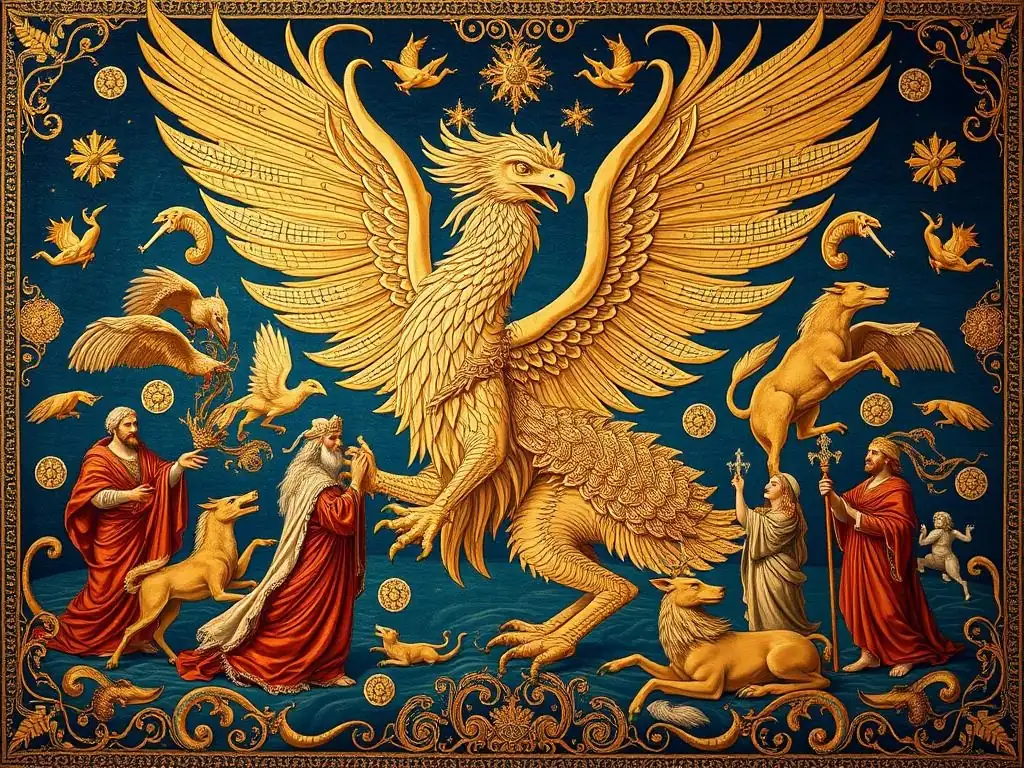
Animals frequently serve as moral guides and provide crucial omens in epic narratives, their behavior interpreted as signs from the gods or fate itself. This highlights a worldview where the natural world is deeply intertwined with the spiritual and destined paths of individuals and communities. Bird omens are particularly common across many traditions. The flight patterns, calls, or interactions of birds were carefully observed and interpreted by seers (augurs) or the heroes themselves to predict future events, determine the favor of the gods, or guide decisions before significant actions like battles or journeys.
In the Iliad, as mentioned earlier, eagles and other birds provide portents that influence the morale and strategies of the Achaean and Trojan forces. A specific example is the omen interpreted by Calchas, the seer, at the beginning of the Trojan War: a serpent devouring nine sparrows and their mother, which he interprets as a sign that the war will last for nine years before the Achaeans are victorious in the tenth.
While interpretations can vary and be debated, the very act of looking to animals for guidance underscores their perceived connection to higher powers and their role in revealing hidden truths or foreshadowing destiny within animal myths epic stories. Other animals, like wolves or serpents crossing a path, can also be interpreted as negative omens, warning of danger or divine displeasure.
The Ethical Treatment of Animals in Epic Contexts
The interactions between epic heroes and animals can also reveal cultural values regarding the ethical treatment of nature and its creatures. While many epics feature the hunting or subjugation of animals, the narrative often subtly (or overtly) judges the hero's actions based on the context and their respect for the animal kingdom. Heroes who demonstrate respect, compassion, or understanding towards animals are often portrayed more favorably or receive aid from nature. For instance, in tales where a hero spares an animal or treats it kindly, that animal might later return the favor, providing assistance or information.
Conversely, disrespect or cruelty towards animals can sometimes lead to negative consequences, implying a moral order that includes the treatment of non-human life. While explicit ethical treatises on animal rights are not the focus of ancient epics, the narratives often reflect societal views on the proper relationship between humans and the natural world.
The bond between a hero and a loyal animal companion, like Argos or Bucephalus, implicitly values the relationship and the animal's inherent worth beyond utility. These portrayals in animal myths epic stories offer insights into the moral frameworks of the cultures that produced them, suggesting that wisdom and heroism are sometimes intertwined with a form of reverence or understanding of the animal kingdom.
The Enduring Legacy of Animal Myths in Epic Stories
How Animal Archetypes Continue to Influence Modern Literature and Art
The powerful animal archetypes and animal myths in epic stories continue to exert a significant influence on modern literature, film, and art. Contemporary storytellers frequently draw upon these ancient motifs, reinterpreting them for new audiences while tapping into their timeless symbolic resonance. The loyal animal companion finds echoes in countless stories, from fantasy novels featuring dragons or wolves as allies to modern films where a pet's loyalty is crucial to the plot.
Think of the direwolves in George R.R. Martin's A Song of Ice and Fire series, which are deeply connected to the fate of the Stark children, mirroring their masters' personalities and destinies.
Mythical beasts as antagonists remain staples of fantasy and science fiction, from the dragons of The Hobbit and The Lord of the Rings to the various creatures faced by heroes in contemporary urban fantasy. These creatures still embody chaos, primal fears, and the ultimate challenges that test a protagonist's courage and resourcefulness.
The symbolism of specific animals – the eagle representing freedom or power, the serpent wisdom or danger, the lion courage or leadership – is still widely understood and utilized in character design, heraldry, and narrative structure, demonstrating the deep imprint left by animal myths epic stories on the collective imagination.
Conclusion: The Timeless Appeal of Animal Myths in Shaping Epic Narratives
Animals in epic literature are far more than mere background figures; they are integral to the fabric of the narratives, serving as potent symbols, divine messengers, formidable adversaries, and loyal companions. From the faithful Argos to the monstrous Hydra, the wise ravens Huginn and Muninn to the regal lion, each animal contributes layers of meaning, enriching the story with symbolism, depth, and cultural significance. Their roles reflect the profound connection between humans and the natural world in the eyes of ancient cultures, highlighting shared beliefs about courage, loyalty, fate, and the forces of chaos and order.
The enduring appeal of animal myths in epic stories lies in their ability to tap into universal themes and primal instincts. Animals provide a tangible link to the wild, the divine, and the archetypal forces that shape human experience.
They embody virtues and vices, offer guidance, and present challenges that allow heroes to demonstrate their true character. By examining the diverse roles and symbolism of animals in these foundational narratives, we gain a deeper understanding not only of the epics themselves but also of the cultural values and worldviews that continue to resonate in storytelling today, confirming the timeless importance of the animal kingdom in shaping our myths and legends.
Frequently Asked Questions
What is the significance of animals in epic stories within the context of mythology and legends?
Animals often serve as powerful symbols representing divine attributes, moral lessons, or the natural world's forces. Their presence can significantly impact the narrative's themes and character development.
How do animal myths and legends reflect the values of different cultures?
Different cultures assign varying meanings to animals, reflecting their unique beliefs, social structures, and environmental interactions. Studying these animal myths offers insights into cultural priorities.
Can you provide an example of a mythical creature frequently found in epic stories and explain its symbolic meaning?
The griffin, a creature with the body of a lion and the head and wings of an eagle, often symbolizes strength, courage, and wisdom. Its dual nature represents a balance between earthly and divine power.
How do animals function as companions or helpers to heroes in epic stories?
Animals can act as loyal companions, guides, or sources of supernatural aid to heroes. They often possess unique abilities or knowledge that assists the hero in overcoming challenges.
What impact do animal myths and legends have on contemporary society and culture?
Animal myths continue to influence literature, art, and popular culture, shaping our understanding of nature, morality, and the human condition. Their enduring presence reflects their timeless relevance.
Final Reflection: Echoes of the Wild in Epic Tales
The enduring power of animals in epic narratives isn't merely a literary device; it's a reflection of our own deeply ingrained relationship with the natural world. These mythical beasts and loyal companions, woven into the fabric of stories across cultures and millennia, continue to resonate profoundly with modern audiences, reminding us of our interconnectedness with the environment and the enduring power of symbolism.
The influence of animal symbolism in epic stories is undeniable, shaping our understanding of heroism, morality, and the very nature of good and evil. These creatures, far from being mere plot devices, act as mirrors reflecting our own hopes, fears, and aspirations. They embody primal forces, embodying both the destructive and creative potential within nature itself. The animal is a mirror in which we see ourselves reflected.
This quote, though not directly from an epic, perfectly encapsulates the profound connection between humanity and the animal kingdom as depicted in these timeless tales.
Consider the impact these stories have had on you. What animal figures resonated most strongly? What did their presence reveal about the human condition, about the power of loyalty, betrayal, or the struggle against overwhelming odds? Let the echoes of these mythical creatures inspire you to explore your own connection to the natural world, to recognize the power of symbolism in your own life, and to appreciate the enduring legacy of these epic narratives.
Here's a CTA tailored for the article "The Role of Animals: Mythical Creatures and Companions in Epics" on MythologyAndLegends.org:
Unleash Your Inner Mythmaker: Craft Your Own Epic Beast!
Thank you for exploring the fascinating world of animals in epic literature! We hope you gained a deeper appreciation for the symbolic power and narrative impact these creatures hold. Now it's your turn to bring your own mythical creations to life.
- Design your own epic animal companion: What unique abilities would it possess? What role would it play in your imagined story? Let your imagination run wild! This is your chance to breathe life into your own legendary beast.
- Share your creation with our community: Post your animal's name, abilities, and a brief description of its role in the comments below. Let's build a bestiary together!
- Explore further: Delve deeper into the mythology of your favorite epic animal. Research its symbolism across different cultures and see how its role has evolved over time.
Ready to unleash your creative power and contribute to our growing community of myth lovers? What unique qualities would your legendary creature possess?