
Norse Gods vs. Celtic Gods: A Comparative Look at Two Mythic Pantheons

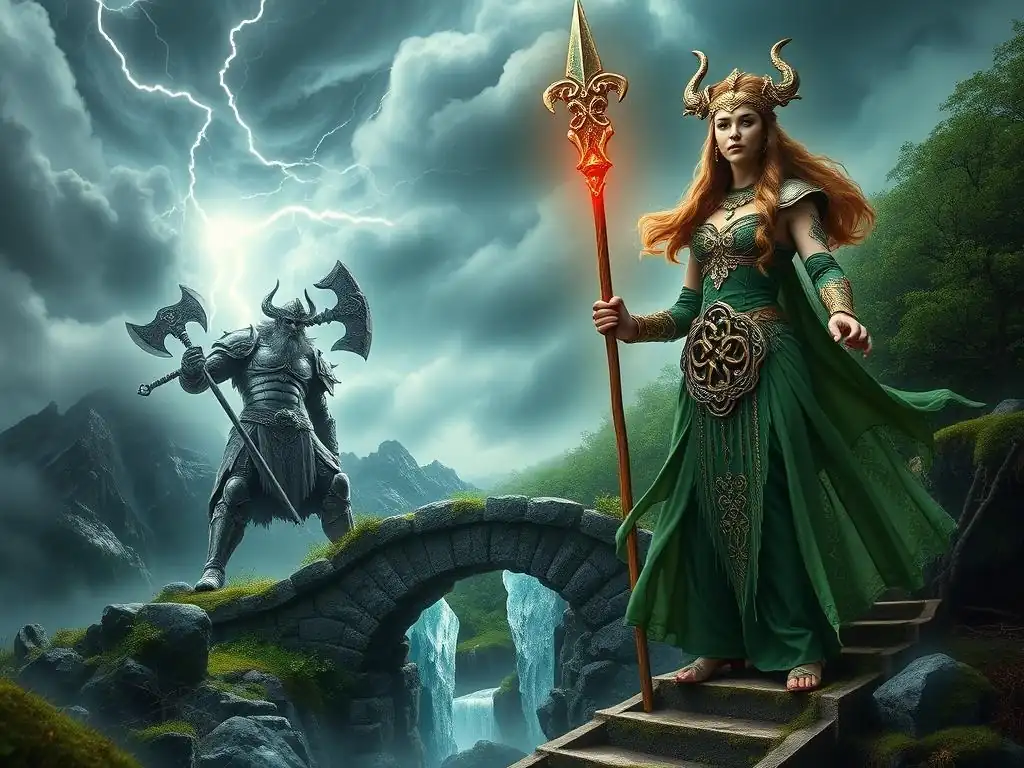
Welcome to Mythology and Legends, your gateway to the world's most enchanting tales! Ever wondered if Odin and the Dagda shared more than just a love for mead? Dive in as we unravel the fascinating parallels and stark contrasts in our Norse Celtic mythology comparison, exploring how these powerful pantheons shaped the beliefs and imaginations of ancient societies. Prepare to be captivated – the secrets of these legendary worlds await!
- The Divine Hierarchy: Key Gods and Goddesses Compared
-
Frequently Asked Questions
- How do Norse and Celtic mythologies differ in their geographical origins and cultural impact?
- What are some key differences in the roles and characteristics of major deities in Norse and Celtic pantheons?
- How do the Norse and Celtic mythologies portray the concept of afterlife?
- In what ways do Norse and Celtic myths and legends reflect the societal values of their respective cultures?
- Are there any notable similarities or shared themes between Norse and Celtic mythologies, despite their differences?
- Final Reflection: Echoes of the Gods in Our Modern World
- Unleash Your Inner Mythologist: Explore the Worlds of Norse and Celtic Gods!
The Divine Hierarchy: Key Gods and Goddesses Compared
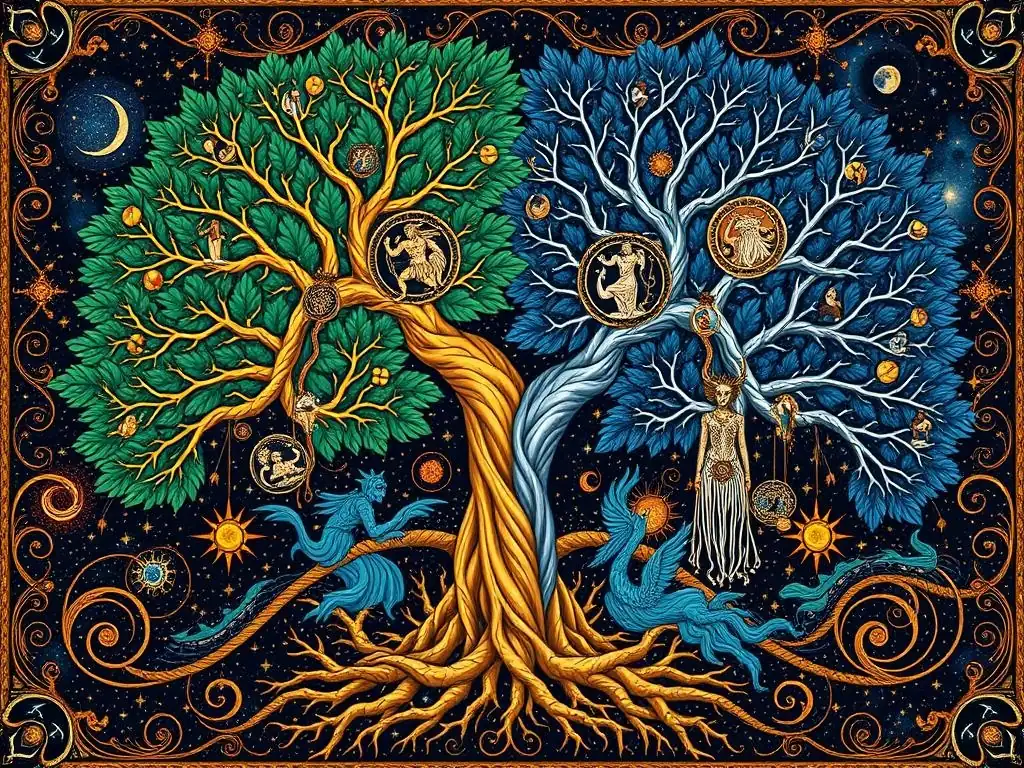
Exploring the central figures within any mythology offers profound insights into the values, fears, and aspirations of the cultures that revered them. In our Norse Celtic mythology comparison, examining the primary deities reveals distinct yet sometimes resonant archetypes. Both pantheons feature powerful beings associated with fundamental aspects of existence such as war, wisdom, fertility, and the elements, though their specific attributes, relationships, and prominence differ significantly.
The structure of the divine hierarchy in Norse and Celtic traditions reflects their societies. Norse mythology, heavily influenced by a warrior culture, often places emphasis on gods associated with battle, strategy, and fate. The Celtic pantheons, while also featuring war deities, show a strong connection to the land, sovereignty, and various crafts, reflecting a more tribal and nature-integrated societal structure. Understanding these key figures is vital for a comprehensive Norse Celtic mythology comparison.
The Norse Pantheon: Prominent Deities and Their Roles
The Norse pantheon is dominated by the Æsir and Vanir, two tribes of gods who eventually merged after a war. These deities resided primarily in Asgard, one of the Nine Realms connected by the world tree Yggdrasil. Their stories, largely preserved in the Poetic Edda and Prose Edda, depict a world constantly facing threats from giants and monsters, leading to a focus on strength, cunning, and the eventual fate of Ragnarök. Key figures like Odin, Thor, and Freya embody central aspects of Norse belief and society.
These prominent deities weren't just distant figures; they were invoked for protection, success in battle, good harvests, and guidance. Offerings and rituals were made to secure their favor. Their myths often involve journeys between realms, interactions with various beings like giants, dwarves, and elves, and personal struggles that reveal their complex natures, providing rich material for any Norse Celtic mythology comparison.
Odin: The Allfather and God of Wisdom
Odin, known as the Allfather, is arguably the most complex and revered figure in the Norse pantheon. He is the chief of the Æsir, a god associated with kingship, war, battle, victory, death, wisdom, magic (especially Seidr), poetry, prophecy, and the hunt.
His pursuit of knowledge is legendary; he famously sacrificed one of his eyes to drink from Mímir's well, gaining cosmic wisdom, and hung himself for nine days and nights on the world tree Yggdrasil to learn the secrets of the runes. He is often depicted with his two ravens, Huginn (thought) and Muninn (memory), who fly across the world and report back to him.
As a god of war, Odin presides over Valhalla, where half of the warriors slain in battle are taken by the Valkyries to feast and prepare for Ragnarök. However, his role extends far beyond mere battle; he is a master strategist, a seeker of hidden truths, and a powerful sorcerer. His multifaceted nature highlights the Norse appreciation for both martial prowess and profound, sometimes dark, wisdom, making him a central figure in understanding Norse beliefs within a Norse Celtic mythology comparison.
Thor: God of Thunder and Protection
Thor, son of Odin and Jörð (the earth), is the mighty god of thunder, lightning, storms, oak trees, strength, healing, and the protection of mankind (Midgard). He is perhaps the most popular god among the common people, known for his immense strength, his magical hammer Mjolnir, his iron gloves Járngreipr, and his belt Megingjörð, which doubles his strength. Thor's primary role is as a defender against the giants (Jotnar), who constantly threaten the gods and the world of humans.
Thor's myths often involve epic battles, journeys to distant realms, and interactions with various creatures. Unlike the cunning and complex Odin, Thor is often depicted as straightforward, powerful, and fiercely protective. His hammer Mjolnir is not just a weapon but also a tool used to hallow and bless, symbolizing his role in maintaining order and well-being. His widespread worship is evidenced by numerous place names and personal names derived from his name, solidifying his importance in the Norse pantheon and as a point of contrast in a Norse Celtic mythology comparison.
Freya: Goddess of Love, Beauty, and Fertility
Freya is a prominent goddess associated with love, beauty, sex, fertility, gold, war, death, and the practice of Seidr magic. She is a member of the Vanir tribe, originally from Vanaheimr, and came to Asgard as part of a peace treaty. Freya is known for her stunning beauty, her necklace Brisingamen, her chariot pulled by two large cats, and her cloak made of falcon feathers that allows her to shape-shift into a bird.
Freya holds a unique position related to death and the afterlife; she receives half of the warriors slain in battle in her hall, Fólkvangr, while Odin receives the other half in Valhalla. This connection to both fertility and death, love and war, highlights her complex nature. As a mistress of Seidr, she also possesses powerful magical abilities, teaching this form of sorcery to Odin himself. Her multifaceted domains make her a fascinating figure when exploring a Norse Celtic mythology comparison, where goddesses often have similar widespread influence.
The Celtic Pantheon: Defining Powerful Celtic Gods and Goddesses
The Celtic pantheons are less systematically documented than the Norse, largely due to the Celts' oral tradition and the fact that much of the written record comes from later Christian scribes or Roman observers. Instead of a single unified pantheon, distinct but sometimes overlapping sets of deities were worshipped across different Celtic regions (Ireland, Britain, Gaul, etc.). Despite this regional variation, certain prominent figures appear in multiple traditions, often associated with tribes, sovereignty, crafts, and the natural world.
These deities were deeply connected to the land and the welfare of the tribe. Many are associated with specific locations, rivers, or natural phenomena. Their myths are often found in epic tales and cycles, such as the Ulster Cycle and the Mythological Cycle in Ireland, depicting their interactions with heroes, humans, and the mysterious Otherworld. Understanding these figures is crucial for a balanced Norse Celtic mythology comparison.
The Dagda: The Good God and Father Figure
In Irish mythology, The Dagda, whose name roughly translates to "the Good God," is a central figure among the Tuatha Dé Danann, the primary race of deities. He is often depicted as a father figure, a king, and a god of fertility, knowledge, magic, and tribal leadership.
The Dagda is associated with several powerful magical artifacts: an enormous club (the lorg mór) that could kill nine men with one end and bring them back to life with the other, a cauldron (the Coire Ansic) that could feed any number of people without ever emptying, and a harp (Uaithne or Dur da Blá) that could control emotions and the seasons.
His epithet "the Good God" does not necessarily imply moral goodness but rather skillfulness or aptitude in many areas, signifying his power and versatility. He is a figure of abundance and authority, deeply connected to the land and its prosperity. His role as a tribal leader and wielder of powerful, life-affirming artifacts positions him as a foundational deity, offering an interesting parallel to figures like Odin or Freyr in a Norse Celtic mythology comparison regarding leadership and fertility.
Morrigan: Goddess of War, Fate, and Sovereignty
The Morrigan, often interpreted as a triple goddess (though sometimes appearing as a single entity or associated with figures like Badb, Macha, and Nemain), is a powerful and formidable figure in Irish mythology. She is primarily associated with war, fate, death, and sovereignty. The Morrigan is not typically a combatant herself but rather influences battles, often appearing as a raven or crow flying over the battlefield, inspiring warriors or instilling fear in enemies.
She is a prophetic figure, sometimes foretelling doom or victory. Her connection to sovereignty is significant; in some myths, she tests or grants kingship. Her interactions with heroes like Cú Chulainn are central to many tales, demonstrating her power to influence the course of events through prophecy, shape-shifting, and psychological impact. Her complex and often fearsome nature highlights the darker, more primal aspects of battle and destiny within the Celtic worldview, providing a strong point of contrast and comparison in a Norse Celtic mythology comparison with deities like Odin or Freya who also have links to war and death.
Lugh: God of Skill, Crafts, and Light
Lugh Lámhfhada (Lugh of the Long Arm) is one of the most prominent and revered figures in Irish mythology, a hero-god of the Tuatha Dé Danann. He is a master of all arts and crafts, excelling as a warrior, craftsman, harper, sorcerer, physician, and smith. This mastery of diverse skills is central to his identity and his role in defeating the oppressive Fomorians, a race of monstrous beings, in the Second Battle of Mag Tuired.
Lugh is often associated with the sun and light, and his festival, Lughnasadh, is celebrated in late summer, marking the harvest. He wields powerful weapons, including a magical spear that ensures victory. His story is one of the young, skilled hero overcoming ancient, chaotic forces, eventually becoming a high king. Lugh embodies the ideal of multifaceted excellence and righteous leadership, standing as a radiant figure in the Celtic pantheon and offering parallels to skilled or solar deities found in other traditions within a Norse Celtic mythology comparison.
Norse and Celtic Divine Roles: Similarities and Differences in Godly Functions
When undertaking a Norse Celtic mythology comparison of divine roles, several similarities emerge despite the distinct cultural contexts. Both pantheons feature father figures (Odin, The Dagda) who act as leaders and possess deep knowledge or magical abilities. Both have powerful war deities (Odin, Thor, Tyr; Morrigan, Nemain, Macha, Lugh) who influence the outcome of battles, though their methods vary from direct combat to psychological manipulation and fate-weaving. Fertility and prosperity are also important domains, represented by figures like Freya and Freyr in the Norse tradition and The Dagda and various earth/mother goddesses in the Celtic.
However, significant differences exist. The Norse pantheon has a clearer, more defined hierarchy and a strong emphasis on fate (wyrd) leading towards a prophesied end (Ragnarök), which heavily influences the gods' actions and roles. Celtic pantheons, being more regional and tribal, often feature deities deeply tied to specific landscapes, tribes, or crafts, with a less pronounced overarching destiny.
The Celtic concept of the Otherworld is perhaps more fluid and accessible than the Norse realms of Valhalla and Hel. Furthermore, while both traditions value magic, the focus differs: Norse Seidr is often associated with destiny and prophecy, while Celtic Druidry and magic are strongly linked to nature, the elements, and the Otherworld. These distinctions highlight the unique paths taken by these two rich mythological traditions in defining the functions and relationships of their divine beings, providing a fascinating lens for a Norse Celtic mythology comparison.
Frequently Asked Questions
How do Norse and Celtic mythologies differ in their geographical origins and cultural impact?
Norse mythology originated in Scandinavia, influencing Germanic cultures. Celtic mythology sprang from Western Europe, impacting regions like Ireland, Scotland, and Wales.
What are some key differences in the roles and characteristics of major deities in Norse and Celtic pantheons?
Norse gods, like Odin, are often depicted as actively shaping fate. Celtic gods, such as Danu, are more closely tied to nature and ancestral lands.
How do the Norse and Celtic mythologies portray the concept of afterlife?
Norse mythology features Valhalla, a warrior's paradise. Celtic mythology has Tír na nÓg, a realm of eternal youth and beauty.
In what ways do Norse and Celtic myths and legends reflect the societal values of their respective cultures?
Norse myths emphasize warrior culture and fate. Celtic myths highlight kinship, nature worship, and connection to the land.
Both feature heroic figures, powerful magical artifacts, and stories about the eternal struggle between order and chaos.
Final Reflection: Echoes of the Gods in Our Modern World
The enduring power of Norse and Celtic mythologies isn't confined to dusty textbooks; these ancient stories continue to resonate deeply within our modern cultural landscape, shaping our narratives and influencing our understanding of heroism, sacrifice, and the very nature of existence. The parallels and divergences explored throughout this comparison highlight not just historical differences, but also the universal human need to grapple with questions of fate, morality, and the mysteries of the cosmos.
The impact of these mythologies extends far beyond academic circles. From fantasy literature and video games to modern art and film, the imagery, characters, and themes of both Norse and Celtic pantheons continue to inspire and captivate. Myth is a way of making sense of the world, of giving it meaning and order.
This quote perfectly encapsulates the enduring relevance of these ancient belief systems, offering us frameworks for understanding our own lives and the complexities of the human experience, even in a world increasingly dominated by science and technology.
Consider the echoes of these ancient gods in your own life. Do you find yourself drawn to the fierce independence of the Norse warriors or the mystical connection to nature found in Celtic lore? Take a moment to reflect on how these powerful narratives might inform your own personal mythology, your own understanding of strength, resilience, and the enduring power of storytelling. Let the legacies of Odin, Thor, and the Tuatha Dé Danann inspire you to forge your own path, embracing both the challenges and triumphs that life presents.
Unleash Your Inner Mythologist: Explore the Worlds of Norse and Celtic Gods!
Thanks for taking the time to delve into the fascinating worlds of Norse and Celtic mythology! We hope you gained a new appreciation for the rich tapestry of stories and beliefs these cultures created. Now it's time to take your exploration further!
- Craft Your Own Pantheon Comparison: Pick your favorite god from each pantheon and write a short comparison highlighting their similarities and differences. Let your imagination run wild!
- Share Your Thoughts: Did a particular god or myth resonate with you? Share your insights and favorite stories in the comments below – let's build a vibrant discussion!
- Discover More Mythological Marvels: Explore our website for more articles on fascinating pantheons and mythical creatures from around the globe. You might be surprised by what you uncover!
What unexpected connections or surprising similarities did you discover between these two powerful pantheons?