
Are We Living Inside an Internet Legend? Questioning Online Reality

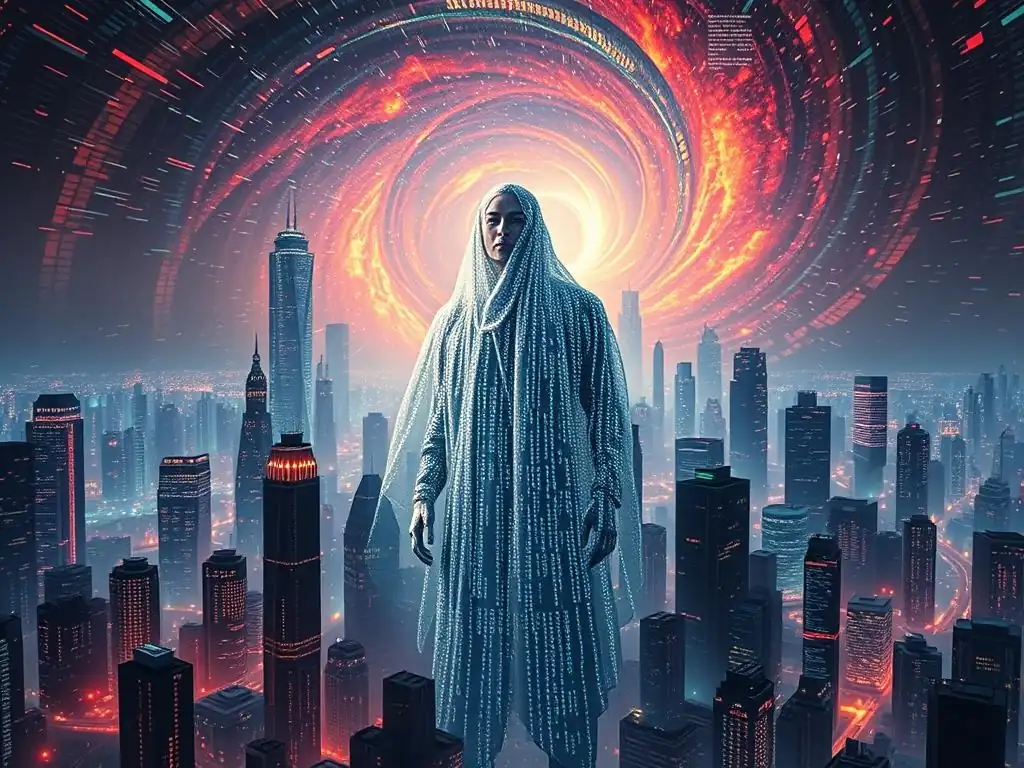
Welcome to Mythology and Legends, where ancient tales meet modern mysteries.
Ever wonder if our digital world is more than just ones and zeros? Dive deep into the rabbit hole as we explore the intriguing world of online reality simulation theories. Could our existence be an elaborate internet legend unfolding before our very eyes? Join us as we unravel this contemporary enigma and question the very fabric of our perceived reality... Prepare to have your perspective shifted!
- Understanding Online Reality Simulation Theories: Core Concepts
-
Frequently Asked Questions
- What are some core concepts of online reality simulation theories?
- How does the "Mythology and Legends" website connect to online reality simulation theories?
- What's the difference between believing in a myth and believing in online reality simulation theories?
- What evidence is often cited to support the idea of an online reality simulation?
- If we're living in a simulation, does it matter?
- Final Reflection: Unraveling the Threads of Online Reality
- Unveil Your Own Online Mythology
Understanding Online Reality Simulation Theories: Core Concepts

The Simulation Argument: A Philosophical Foundation for Digital Reality
At the heart of many online reality simulation theories lies a compelling philosophical framework known as the simulation argument. Popularized by philosopher Nick Bostrom, this argument posits that at least one of three propositions must be true: either the human species is very likely to go extinct before reaching a "posthuman" stage capable of running high-fidelity ancestor simulations, or any posthuman civilization is extremely unlikely to run a significant number of simulations of its evolutionary history, or we are almost certainly living in a simulation.
This probabilistic approach suggests that if advanced civilizations are possible and interested in running simulations, the sheer number of simulated realities they could create would vastly outnumber the single base reality, making it statistically probable that our reality is one of the simulations.
Bostrom's paper, published in 2003, provided a logical structure that moved the concept of simulated reality from pure science fiction into a realm of serious philosophical and scientific debate. While the argument itself doesn't claim we are in a simulation, it argues that the probability is high unless certain conditions about the future of advanced civilizations hold true. This foundation gives online reality simulation theories a veneer of intellectual legitimacy, providing a jumping-off point for discussions in online forums and communities where individuals explore the implications of living in a potentially simulated universe.
Exploring the Matrix: How Pop Culture Shaped Perceptions of Simulated Worlds
While philosophical arguments provided a logical basis, it was undoubtedly popular culture, particularly the 1999 film The Matrix, that catapulted the concept of a simulated reality into mainstream consciousness. The movie's iconic depiction of humanity unknowingly living within a vast computer program created by intelligent machines resonated deeply with audiences and provided a vivid, accessible metaphor for online reality simulation theories. The film's themes of questioning reality, seeking truth beyond the perceived world, and the potential for "glitches" in the system became powerful cultural touchstones.
The Matrix didn't just entertain; it provided a shared lexicon and visual language for discussing simulation hypotheses. Concepts like "red pill or blue pill," "the matrix," and "agents" became shorthand for challenging conventional reality and identifying potential anomalies. This widespread cultural impact significantly lowered the barrier to entry for understanding and discussing online reality simulation theories, transforming a niche philosophical idea into a prevalent topic of conversation across the internet, from academic forums to casual social media discussions.
Key Elements of Online Reality Simulation Beliefs: Glitches, Deja Vu, and the Mandela Effect
Believers in online reality simulation theories often point to specific phenomena as potential evidence that our world is not as solid or "real" as it seems. One frequently cited sign is the concept of "glitches in the matrix," which are perceived inconsistencies, improbable coincidences, or strange occurrences that defy logical explanation. These might range from seeing the same unfamiliar person multiple times in different locations to objects seemingly disappearing and reappearing, interpreted not as random chance but as errors or bugs in the underlying simulation's code or rendering process.
Another common element is deja vu, the feeling of having already experienced a present situation. While science offers psychological explanations related to memory processing, simulation theorists sometimes interpret deja vu as the simulation "reloading" a scene or repeating a sequence of events. The Mandela Effect is perhaps one of the most prominent examples within online reality simulation theories.
This phenomenon describes collective false memories about specific facts or events – for instance, many people remember Nelson Mandela dying in prison in the 1980s, despite historical records showing he was released and later became president of South Africa before dying in 2013. Simulation believers sometimes attribute these widespread discrepancies to changes or adjustments made to the simulation's historical data or parameters.
Frequently Asked Questions
What are some core concepts of online reality simulation theories?
These theories propose that our reality isn't "real" but a sophisticated computer simulation, akin to a highly advanced video game or virtual world. They often involve concepts like glitches, code, and the possibility of "logging out".
How does the "Mythology and Legends" website connect to online reality simulation theories?
The website explores myths and legends, which, like simulation theories, offer alternative explanations for our existence and the nature of reality. Both delve into narratives that question what is fundamentally true.
What's the difference between believing in a myth and believing in online reality simulation theories?
While both involve accepting something without definitive proof, simulation theories often draw on scientific and technological possibilities. Myths tend to rely on cultural and spiritual narratives passed down through generations.
What evidence is often cited to support the idea of an online reality simulation?
Proponents point to things like quantum physics anomalies, the uncanny patterns found in nature (like the Fibonacci sequence), and the rapid advancement of virtual reality technology as potential clues.
If we're living in a simulation, does it matter?
That's a philosophical question! Some argue that understanding the "rules" of the simulation could grant us power or control. Others believe it wouldn't change the fundamental human experience.
Final Reflection: Unraveling the Threads of Online Reality
The blurring lines between our digital and physical lives are not merely a technological advancement; they represent a fundamental shift in human experience. The proliferation of online personas, curated realities, and the sheer volume of information available online forces us to confront the very nature of truth and authenticity in a way previous generations never had to. We are, quite literally, living inside a constantly evolving digital landscape, and the questions this raises are far from trivial.
The impact of this constant connectivity, this immersion in a simulated world of sorts, is profound and far-reaching. It shapes our social interactions, our political discourse, and even our sense of self. The ease with which misinformation spreads, the pressure to maintain a perfect online image, and the addictive nature of social media platforms all contribute to a complex and often unsettling reality. As Marshall McLuhan famously stated, The medium is the message,
and in our hyper-connected world, the medium – the internet – is shaping our understanding of the message – reality itself – in unprecedented ways.
Consider the implications of this for a moment. How much of your self-perception is shaped by your online presence? How much of the information you consume is truly verifiable? You are the architect of your own online reality, but are you also a prisoner of it? I urge you to take a step back, to critically examine your relationship with the digital world, and to consciously cultivate a more balanced and authentic existence, both online and offline. The future of our collective reality depends on it.
Unveil Your Own Online Mythology
Thanks for exploring the fascinating world of online legends with us! We hope you gained a new perspective on the blurry lines between reality and the internet. Now, it's time to take action and delve deeper!
- Craft your own online legend: Think about a recurring online phenomenon you've witnessed. What makes it legendary? Write a short story about it, exploring its mythical qualities and how it affects our perception of online reality. This is your chance to become a myth-maker!
- Share your thoughts: What aspects of online culture intrigue or concern you the most regarding the blurring lines between fact and fiction? Let's discuss it in the comments below!
- Explore other articles on our site: Discover more captivating mysteries and legends surrounding the digital world on MythologyAndLegends.org.
What unique online legend will you uncover next?