
The Dark Side of Myth: How Norse and Celtic Legends Were Used for Division

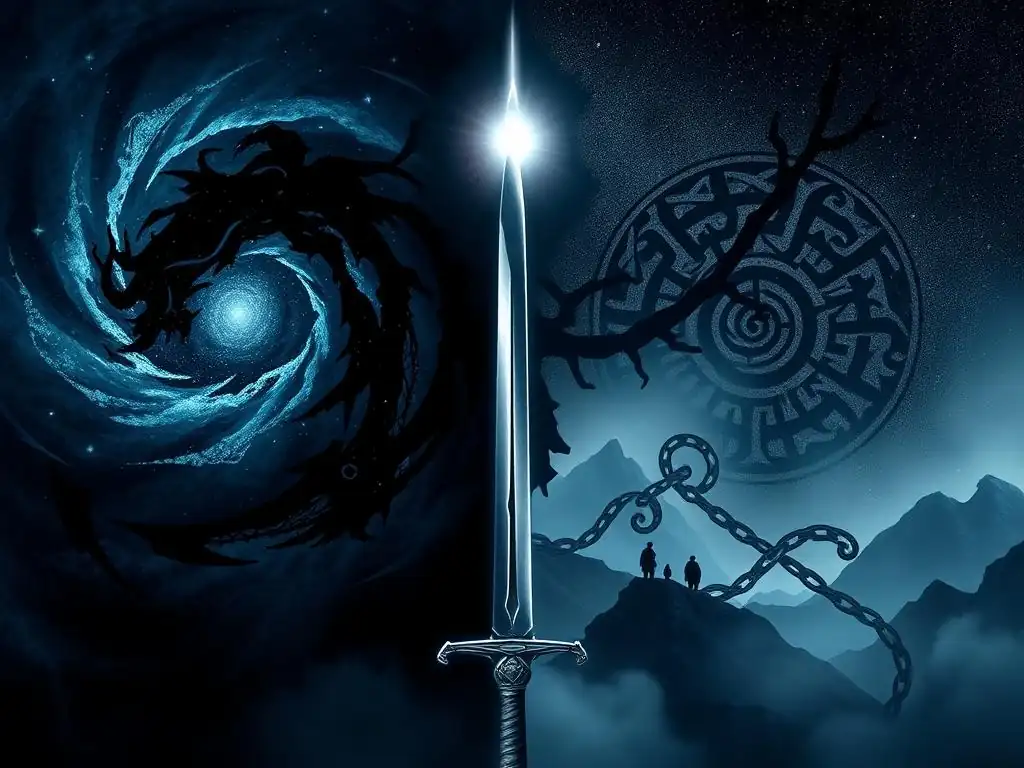
Welcome to Mythology and Legends, where we delve into the captivating world of ancient tales. Ever wondered how powerful stories can be twisted? Prepare to explore the shadowy corners of history as we unravel the complex narrative of Norse Celtic division myths and uncover the often-overlooked darker implications lurking within these legendary narratives. Are you ready to see how myths can be used, not just to inspire, but also to divide?
- Exploiting Ancient Narratives: The Rise of Divisive Interpretations
-
Frequently Asked Questions
- What is the main argument of the article "The Dark Side of Myth: How Norse and Celtic Legends Were Used for Division"?
- How were Norse and Celtic myths specifically used to promote division?
- What role did Romanticism play in the misappropriation of Norse and Celtic myths?
- Are all interpretations of Norse and Celtic myths inherently harmful?
- What can be done to combat the misuse of Norse and Celtic myths for divisive purposes?
- Final Reflection: Unmasking the Shadow of Myth
- Uncover the Hidden Truths: Explore the Power of Mythology
Exploiting Ancient Narratives: The Rise of Divisive Interpretations
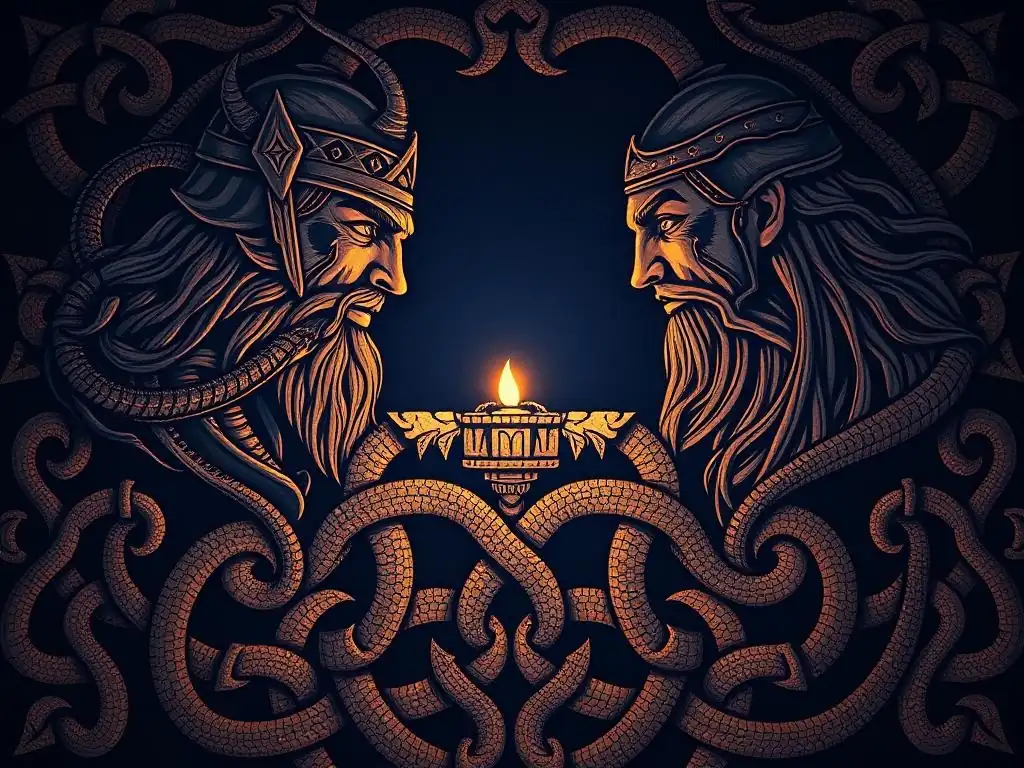
The rich tapestries of Norse and Celtic mythology, originally serving complex spiritual and cultural functions within their respective societies, faced a profound transformation beginning largely in the 18th and 19th centuries. As Enlightenment ideals gave way to the Romantic movement, there emerged a fervent interest in folk traditions, national origins, and the concept of distinct cultural identities.
This period, while fostering genuine appreciation for ancient heritage, also provided fertile ground for the selective appropriation and reinterpretation of myths, often bending them to serve nascent or burgeoning nationalist agendas. The focus shifted from understanding these narratives on their own terms to molding them into foundational stones for modern nation-states, inadvertently laying the groundwork for Norse Celtic division myths by emphasizing perceived differences and historical antagonisms.
This era saw scholars, writers, and politicians alike delving into sagas, epics, and folklore not just for academic curiosity, but for political utility. Ossian, a collection of poems published by James Macpherson in the 1760s and claimed to be translations of ancient Scottish Gaelic epics, despite being largely his own invention, became an international sensation and a potent symbol of a distinct Celtic past, influencing thinkers like Goethe and Napoleon. While controversial, its reception highlights the era's hunger for ancient, national narratives.
Similarly, the rediscovery and translation of Eddic and saga literature in the Nordic countries fueled a sense of shared history and identity among Scandinavians and Germans, sometimes creating artificial boundaries and contributing to the complex history of Norse Celtic division myths. The move was from shared human themes to distinct, often exclusive, national characteristics.
The Romantic Era: A Catalyst for Nationalist Appropriation of Myths
The Romantic period, roughly spanning from the late 18th to the mid-19th century, was characterized by a deep fascination with the past, emotion, individualism, and the glorification of nature and the 'folk'. This era coincided with the rise of modern nationalism across Europe. As political boundaries shifted and new national identities were forged, there was a widespread desire to find historical roots and cultural justification for these emerging nations.
Ancient myths and legends, seen as the authentic voice of a people's soul and history, became prime targets for this search. Intellectuals, poets, and historians sought to uncover or construct narratives that demonstrated a long, distinct lineage, often portraying idealized, heroic ancestors.
This focus on national distinctiveness inherently fostered a climate where differences between cultural groups were emphasized, sometimes exaggerated. Norse myths were increasingly linked to Germanic peoples, while Celtic myths became cornerstones for Irish, Scottish, and Welsh identity movements.
This process wasn't always malicious initially, often starting as a celebration of unique heritage. However, by highlighting specific traits or historical 'events' found (or interpreted) in myths as inherently defining one group and different from others, it inadvertently contributed to the development of narratives that could later be used to justify separation or even antagonism, subtly weaving the threads of Norse Celtic division myths into the cultural fabric.
Norse Mythology and Germanic Identity: Forging a "Pure" Past
In the German-speaking lands and Scandinavia, the Romantic fascination with the past heavily centered on Norse mythology. Figures like Richard Wagner monumentalized Germanic gods and heroes in his operas, notably the Ring Cycle, drawing heavily on the Nibelungenlied and Norse sagas. While artistically significant, these works contributed to a popular image of a powerful, ancient Germanic spirit rooted in the world of Odin, Thor, and the Valkyries. This idealized past was often contrasted with perceived 'foreign' influences, particularly Christianity, which was sometimes viewed as having suppressed the 'true' Germanic soul.
This romanticized view of Norse mythology as the exclusive heritage of a unified "Germanic" people gained dangerous traction in the late 19th and early 20th centuries. It became intertwined with racial theories that sought to define a pure 'Aryan' or Nordic race, claiming descent from these mythical ancestors. Thinkers and groups within movements like the Völkisch movement appropriated Norse symbols and narratives to promote a sense of racial superiority and national destiny.
They interpreted Viking expansion not just as historical migration but as evidence of an inherent, dynamic racial energy, contrasting it with other groups. This selective and often distorted use of Norse myth was instrumental in constructing a narrative of a distinct, superior Germanic identity, explicitly contributing to Norse Celtic division myths by defining "us" (Norse/Germanic) in opposition to "them" (including Celts, Slavs, and others).
Celtic Revival and Irish Nationalism: Constructing a Narrative of Oppression and Resistance
Concurrently with the Germanic focus on Norse myth, the Celtic Revival movement in Ireland, Scotland, and Wales saw a surge of interest in their own ancient heritage, particularly in the late 19th and early 20th centuries. In Ireland, this revival was deeply intertwined with the growing movement for Home Rule and eventual independence from British rule. Writers like W.B.
Yeats, Lady Gregory, and J.M. Synge drew inspiration from Irish mythology, folklore, and the Gaelic language to assert a distinct Irish identity separate from the dominant English culture. Figures like Cú Chulainn, the heroic warrior of the Ulster Cycle, were resurrected as national icons, symbolizing strength, defiance, and a long history of resistance.
The narratives drawn from Celtic myths were often interpreted through the lens of contemporary political struggles. Ancient tales of invasions, battles, and the assertion of sovereignty were recast as allegories for Ireland's historical relationship with England. The perceived suppression of Gaelic culture and language under English rule was framed as a continuation of historical injustices depicted in legends.
This use of myth effectively constructed a powerful narrative of a distinct, ancient Irish nation with a history of enduring oppression and continuous resistance. While vital for fostering national pride and unity among Irish people, this narrative, by emphasizing historical conflict and difference, also contributed to a broader sense of cultural distinction that, in the context of the era's identity politics, could reinforce ideas of Norse Celtic division myths, albeit often framed differently than the racial ideologies emerging concurrently in the Germanic world.
Frequently Asked Questions
What is the main argument of the article "The Dark Side of Myth: How Norse and Celtic Legends Were Used for Division"?
The article argues that Norse and Celtic myths, while rich and fascinating, have been misappropriated and distorted to fuel divisive ideologies, particularly within nationalist and racist movements. This misuse often involves selective interpretation and fabrication of historical narratives.
How were Norse and Celtic myths specifically used to promote division?
Norse and Celtic symbols and narratives were often falsely linked to specific ethnic groups to create a sense of racial superiority and historical entitlement. This was used to justify discrimination and violence against perceived "outsiders."
What role did Romanticism play in the misappropriation of Norse and Celtic myths?
The Romantic era saw a surge of interest in folklore and national identity. While not inherently negative, this romanticization inadvertently provided fertile ground for selective interpretations and the creation of idealized, often inaccurate, versions of Norse and Celtic heritage that were later exploited.
Are all interpretations of Norse and Celtic myths inherently harmful?
No. The article focuses on the misuse and distortion of these myths. Studying and appreciating Norse and Celtic traditions can be valuable, but it's crucial to be aware of the potential for manipulation and to promote critical thinking about historical narratives.
What can be done to combat the misuse of Norse and Celtic myths for divisive purposes?
Promoting accurate historical education, encouraging critical engagement with sources, and actively challenging misinformation and hateful ideologies are essential steps in preventing the misuse of these powerful narratives.
Final Reflection: Unmasking the Shadow of Myth
The weaponization of myth, once a tool for unity, has tragically become a recurring theme throughout history, and its echoes resonate powerfully in our modern world. The exploration of Norse and Celtic legends, often romanticized, reveals a darker side: their manipulation for political and social division. This isn't simply historical curiosity; it's a stark warning against the dangers of selective storytelling and the misuse of cultural heritage.
The enduring power of these myths, their capacity to inspire both fervent loyalty and bitter conflict, continues to shape our understanding of identity and belonging. These narratives, passed down through generations, have been selectively emphasized and distorted to justify violence and oppression, proving that even the most ancient stories can be twisted to serve contemporary agendas. The past is never dead. It's not even past.
– William Faulkner. This quote perfectly encapsulates the ongoing relevance of understanding how these myths have been, and continue to be, weaponized. We must acknowledge this legacy to prevent similar manipulations in the future.
Consider the impact of these narratives on your own life. How do the stories you've been told shape your worldview? Are you actively engaging with diverse perspectives, or are you inadvertently perpetuating harmful stereotypes through the uncritical acceptance of simplified narratives? Take the time to critically examine the myths you hold dear, to understand their complexities, and to recognize the potential for their misuse. Let's learn from the past to build a future where shared heritage fosters unity, not division.
Thanks for delving into the complex history of Norse and Celtic legends! You've gained a fascinating perspective on how these powerful stories were manipulated. Now, let's take that understanding further.
- Dive deeper: Research other examples of mythology used for political or social control. Consider exploring lesser-known myths from different cultures.
- Share your insights: Discuss your thoughts on the ethical implications of using mythology for divisive purposes in the comments below. Let's start a conversation!
- Challenge your perspective: Consider how similar narratives might be used today – and how we can counter this trend.
What other historical examples can you think of where storytelling was used to manipulate or control populations? Let's discuss it in the comments!